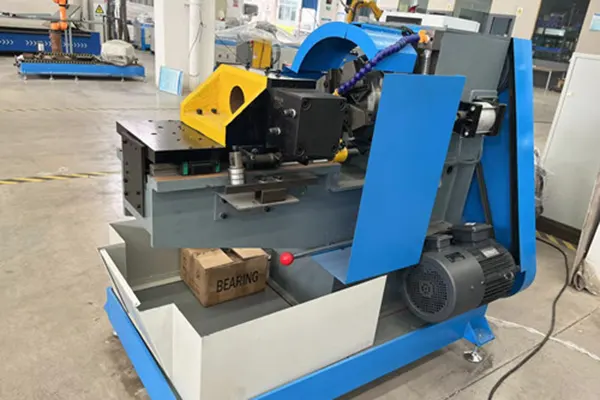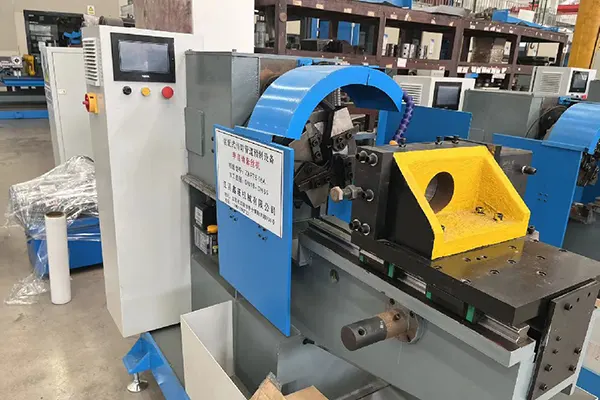

Detailed Illustrated Introduction to Large Fire Pipe Dedicated Threading Machine
In the construction of various installation projects (including steel structure installation, concrete formwork installation, water and electricity installation, fire pipe installation, etc.), round steel is widely adopted to fabricate brackets for tensioning and fixing main components. It is necessary to prefabricate threads of a specified length at both ends of each round steel bar, so that nuts can be applied for tension adjustment as required.
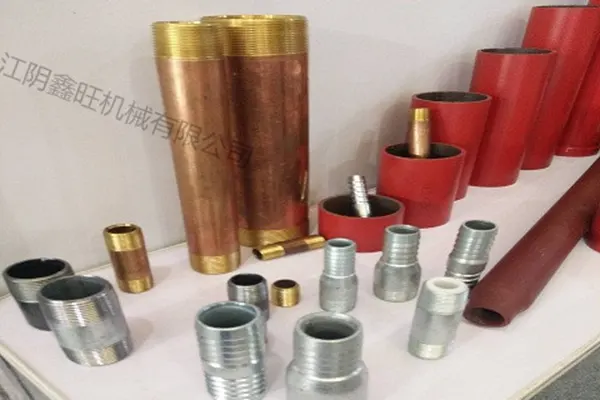
Boasting higher threading precision, the dedicated threading machine for fire pipes is mainly used for internal and external thread machining in factories and construction sites, especially for thread processing of embedded bolts and thread sleeves by steel structure enterprises and road & bridge construction contractors.
Developed on the basis of legacy products through repeated practical tests, this dedicated fire pipe threading machine is a new fully automatic hydraulic threading model. As professional equipment for mining and construction machinery, it features a compact structure, exquisite workmanship, simple operation and easy maintenance. Equipped with industrial PLC control, it realizes a full range of automatic functions including automatic lubricant feeding, automatic clamping and automatic loosening. The threading process compresses the internal density of steel and improves its tensile strength, making the equipment a non-chip processing solution. Compared with conventional manual threading machines, it delivers multiple advantages: lower raw material consumption, higher finished product quality, greater productivity, less manpower demand and reduced physical workload for operators.
Routine maintenance is critical for the fire pipe dedicated threading machine. It is recommended to clean the oil pan daily. If the oil turns dark or contaminated, drain and clean the fuel tank before filling with fresh oil. After daily operation of the rebar straight-thread threading machine, clean the dies and die head, inspect the dies for chipped teeth and clear chips trapped between teeth. Replace damaged dies in a full set of four instead of single pieces when defects are found.
To maintain lubrication for the front and rear bearings of the hydraulic threading machine, refill grease via the two oil cups on the main shaft housing no less than twice per day. Inspect the cutter blade weekly and replace blunt cutters promptly, alongside cleaning the fuel tank filter on a weekly basis. Conduct a monthly check for component wear and tear, and replace heavily worn parts immediately.
In the construction of various installation projects (including steel structure installation, concrete formwork installation, water and electricity installation, fire pipe installation, etc.), round steel is commonly made into brackets to tension and fasten main structural parts. Threads of preset length need to be machined at both ends of each round steel bar for subsequent tension adjustment with nuts. Traditionally, thread forming for round steel ends relied on thread rolling machines: cut-to-length round steel is rolled and extruded between two rolling dies to form threads, a method only suitable for short round steel workpieces.
Thread rolling machines have notable drawbacks: finished threads offer low tensile strength, the rolling operation is cumbersome for long round steel bars, and the bulky, heavy body hampers on-site mobile operation. Turning threads on general lathes is even less practical: frequent tool sharpening is required, multi-pass machining is inevitable, skilled lathe operators are needed to guarantee standard pitch and thread angle, and the round steel bar itself must be rotated during processing.