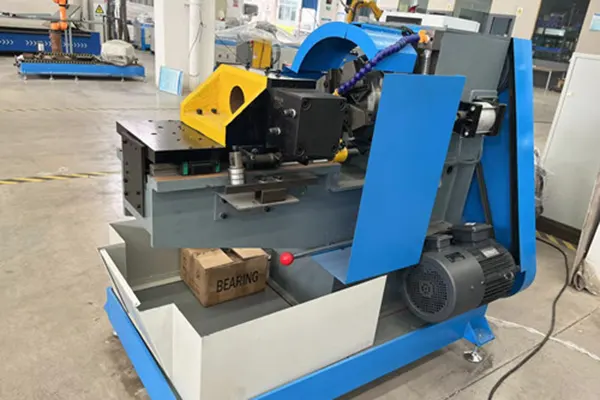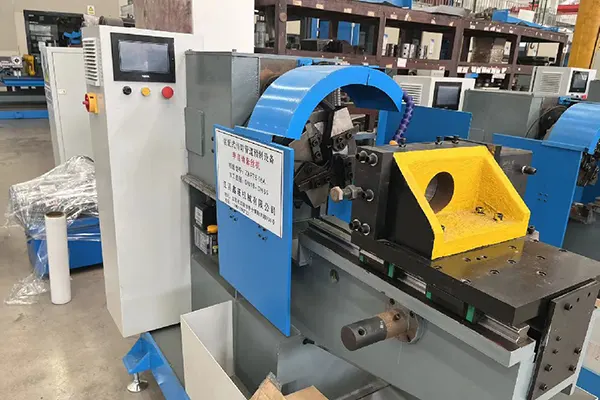

Common Faults and Maintenance Methods of Taps Machine
1. Fault in Switch Circuit
After the taps machine completes threading, when the feed lever of the slide is pulled back to the starting position, the chuck does not open. This is usually due to a circuit issue or a switch problem. To troubleshoot, try manually actuating the travel switch to see if normal operation resumes. If it does, it indicates a circuit issue, which can be resolved by manual operation. If there is no response, it suggests a fault in the switch circuit, requiring the switch to be replaced.
2. Chuck Fails to Grip
During threading, if the chucking system fails to perform the gripping action normally, this is typically caused by the cylinder or oil pump not working. To address this, check if the cylinder solenoid valve is functioning and if the oil pump is receiving power. Once the issue is identified, replace the faulty component immediately.
3. Main Spindle Cutter Head Fails to Extend
The failure of the main spindle cutter head to extend is usually caused by the servo motor not working. It is recommended to check if the servo motor's power plug and communication plug are loose. If they are not loose, touch the motor housing to check for overheating. If the housing temperature exceeds 75 degrees Celsius, the motor needs to be replaced.
4. Water Pump Overload Alarm
If an overload alarm occurs during the operation of the taps machine, it may be due to a missing phase in the circuit, a tripped overload protector, or a burned-out water pump. Check the circuit, overload protector, and water pump sequentially to identify and eliminate the problem.
5. Oil Pump Overload Alarm
This situation may result from a missing phase in the circuit, a tripped overload protector, a burned-out oil pump, or a mismatch between the pipe diameter specification and the gear position. Check the circuit, overload protector, and oil pump sequentially, and adjust the intelligent taps machine to the appropriate gear position.
6. Servo Front Limit Alarm
A servo front limit alarm may be caused by a damaged
intenance and Care Methods for Intelligent Pipe Threaders
1. The gearboxes of pipe threaders are equipped with circulating forced lubrication systems. Lubrication uses #46 machine oil, with a general viscosity range of 41.4~50.6 E40. This can be adjusted within the above range according to the ambient temperature where the equipment operates.
2. It is recommended to replace the lubricating oil in the pipe threader's gearbox every six months.
3. Lubrication of the guide rail sliders: The guide rail sliders are located below the jaw system support plate. Before use, they should be oiled once with an oil gun. Regularly apply lubricant to the surface of the guide rails; it is suggested to do this 1~2 times per week.
4. Transportation of pipe threaders: To ensure safe transportation, it is recommended to use a forklift (at designated forklift positions) or lifting (at designated safe lifting points).
This concludes the common troubleshooting and maintenance methods for intelligent pipe threaders.